


Scarcity versus Abundance.
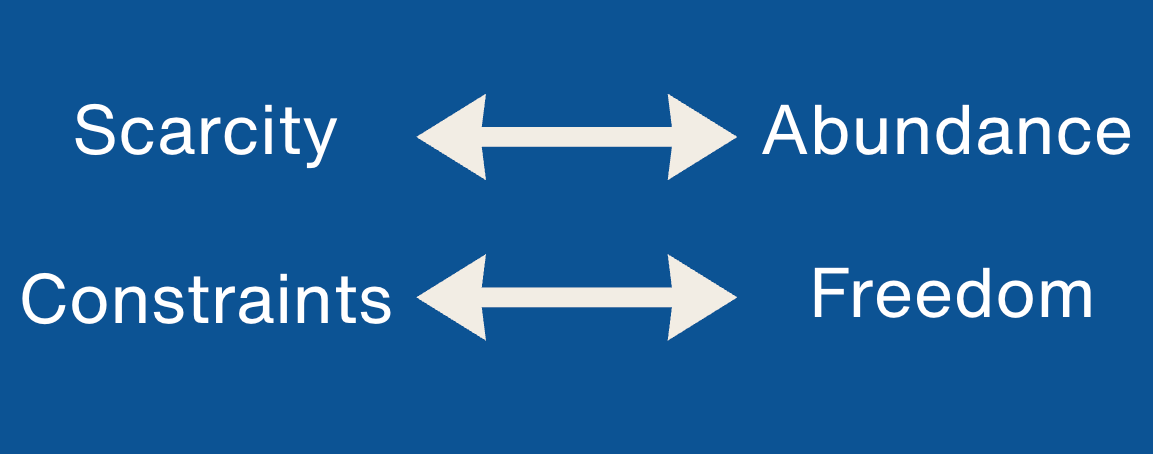
The concept of scarcity versus abundance, and, more recently, constraints versus freedom, has increasingly occupied my mind over the last few years.
Vitaly Katsenelson first introduced to me the concept of the value of scarcity and the pitfalls of abundance in 2023 in Omaha, which he subsequently discussed here.
There has to be a beautiful balance of scarcity and abundance. Make something abundant, and if everyone can have it, eventually, no one wants it. Abundance can rapidly devalue things we enjoy. With too much of something, your incremental satisfaction rapidly declines and can even become negative.
Conversely, controlled scarcity, whether through supply or price, can make things desirable. More often than not, it makes us want what others have. Luxury clearly excels at this, think Hermès in handbags, Patek Philippe in watches, and Ferrari in sports cars.
Constraints versus Freedom.
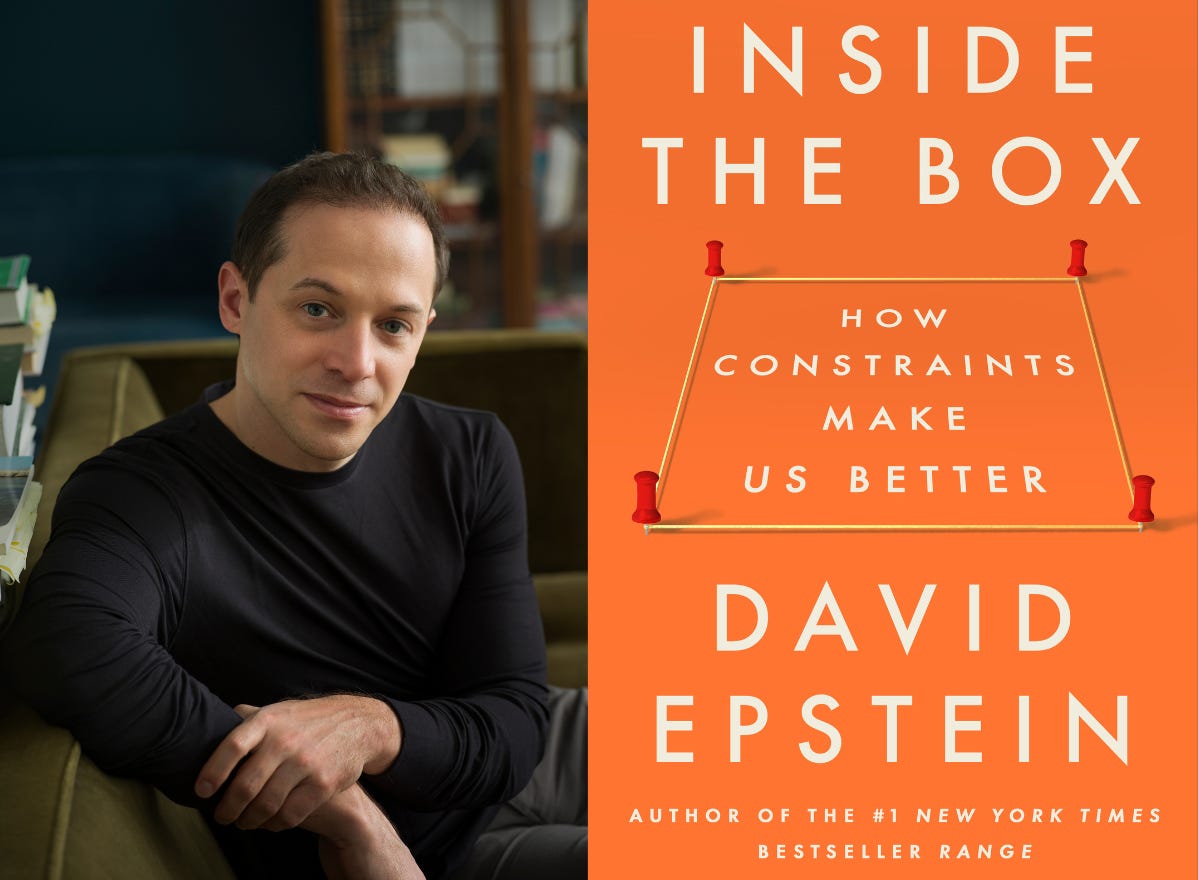
David Epstein, in his latest book “Inside the Box: How Constraints Make Us Better”, synthesized the concept of constraints versus freedom, and specifically makes the case on how constraints make us better. I thought the concept of constraints offered a deeper insight into scarcity, and I wanted to expand on this further.
Desiring complete freedom.
Below is one of my favorite quotes from the financial writer, Morgan Housel:
“The highest form of wealth is the ability to wake up every morning and say, ‘I can do whatever I want today.’ People want to become wealthier to make them happier. Happiness is a complicated subject because everyone’s different. But if there’s a common denominator in happiness—a universal fuel of joy—it’s that people want to control their lives. The ability to do what you want, when you want, with who you want, for as long as you want, is priceless. It is the highest dividend money pays.”
- Morgan Housel - “The Psychology of Money” (2020)
I would add “how you want, and where you want” to that as well. A revised version of having “complete freedom” would probably look something like this:
“The highest form of wealth is the ability to do what you want, when you want, with who you want, how you want, and where you want.”
- Eugene Ng
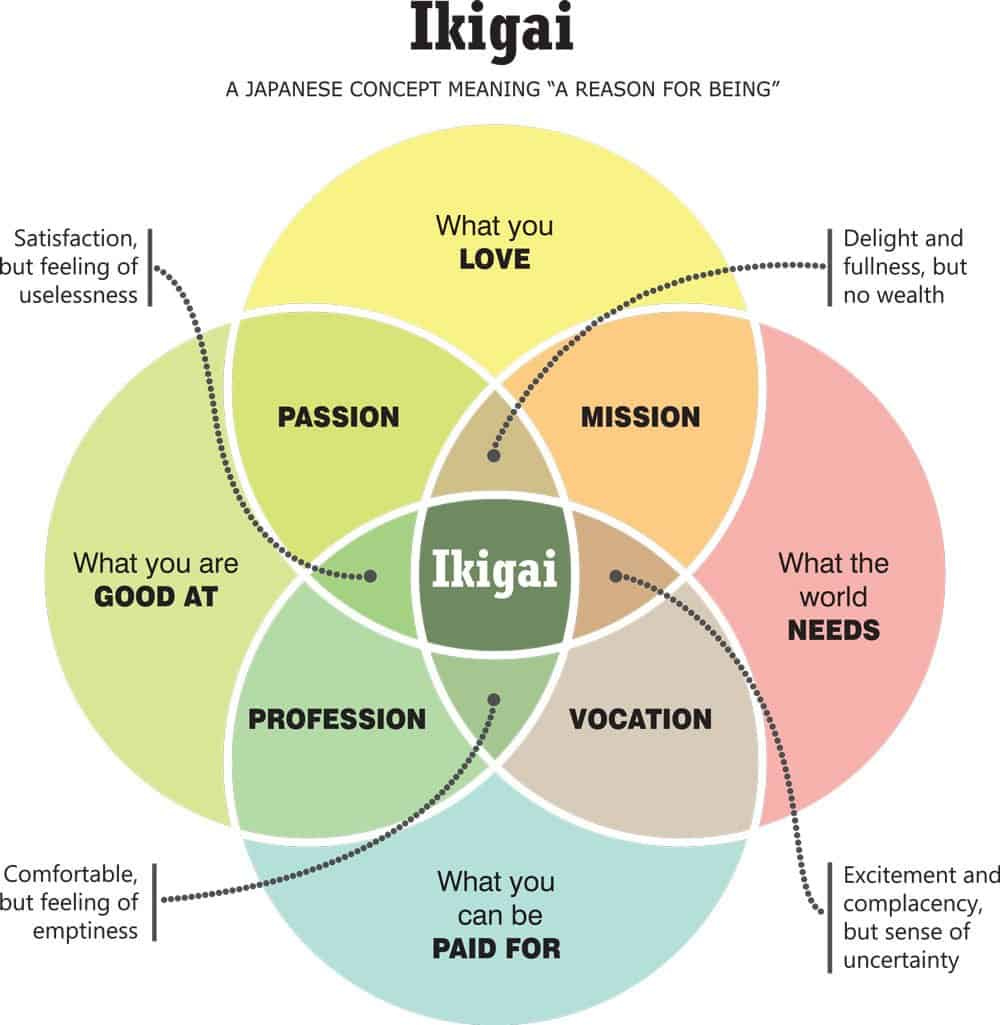
When I decided to quit my job just over two years ago to start Vision Capital Fund to do my dream work for the rest of my life, I had this life goal in mind. I no longer had to trade my time for money by doing work I did not love (but was good at). I wanted to live my Ikigai (生き甲斐) for the rest of my life till I die.
Suddenly, my entire calendar cleared up. I could be as busy as I want if I said yes to everything and wanted to do it all. Conversely, I could be as free as I want if I said no to everything and did nothing. I remembered being asked by the MITIMCo team back in 2024, “What would your day be like when you are doing this full-time?” That single question had been constantly on my mind in this new lifelong marathon.
What I valued most was the freedom, not determined by working hours or the need to work on other people’s agendas and goals. The freedom was implicit, no longer explicit. Intrinsic goals internally drove it. I could work as hard as I want when and how I want. I could binge-read a book in 1-2 days, write articles in hours, or sprint for an intense 1-2 weeks to write an investment memo.
But I soon realized that copious amounts of freedom can be extremely dangerous if one is not highly disciplined. Before you know it, time passes rapidly. After all, who you are is how you spend your time. What you do, you eventually become. This brings me to the idea of forced constraints.

Avoid having total freedom without constraints.
David Epstein, in his latest book “Inside the Box: How Constraints Make Us Better” (which I highly recommend), frames with excellent examples (General Magic vs. Pixar, Virginia Woolf, Isabel Allende, etc) the idea that forced constraints (of being inside the box), rather than no constraints (being unboxed), can create powerful breakthroughs.
The story of General Magic (1990-2004) raising so much capital so quickly to create “heaven for engineering” resulted in too much creative freedom for its engineers. Innovation and inventions came fast and furious, and they were custom-building almost everything.
Overflowing with resources and talent, and with few helpful constraints, General Magic grew rapidly without clear boundaries, not having a clear idea of what they were building, who they were building for, how much it was going to cost, or when it was going to ship.
Eventually, General Magic, like most startups, died of indigestion, rather than starvation (David Packard). A world without any limits will likely not last in the end.
Do something, not everything. Do not try to be everything to everyone and eventually become nothing to no one. A jack of all trades is a master of none.

Have some constraints.
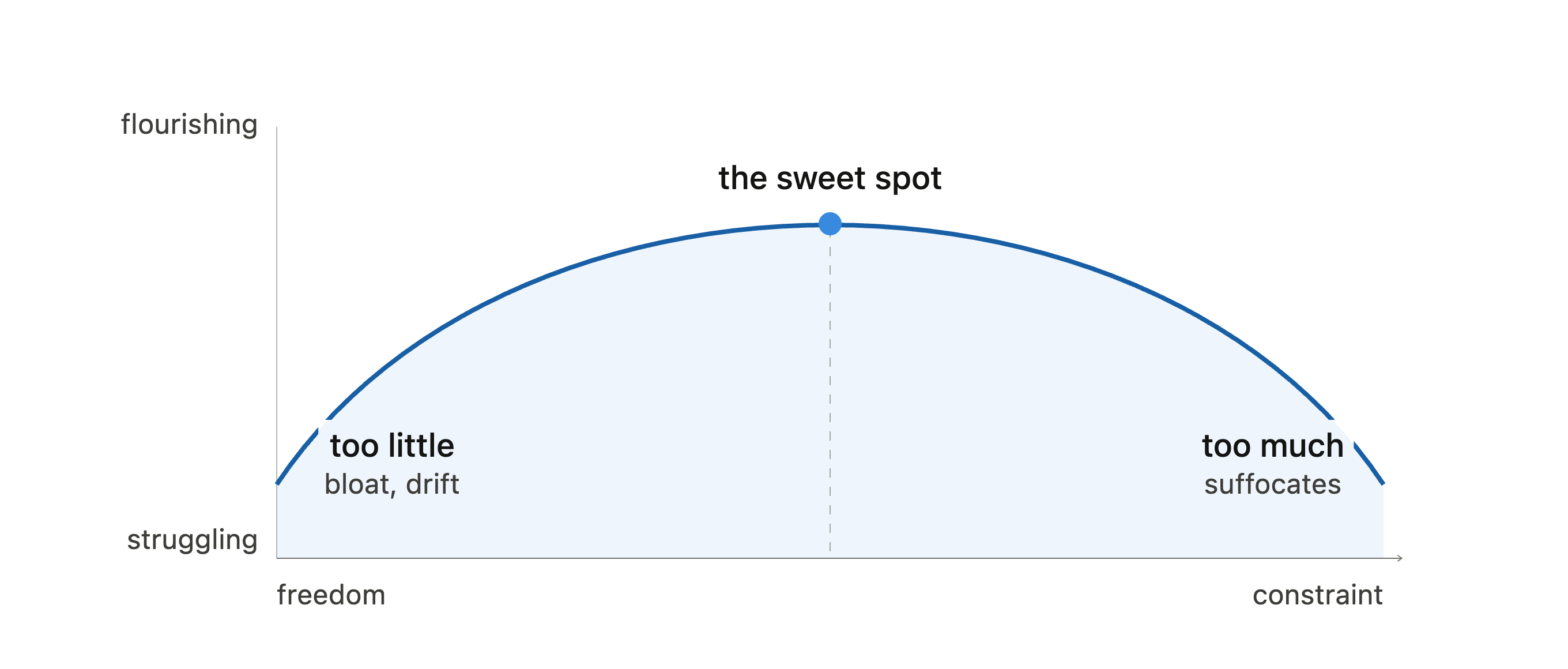
No constraints and too much freedom bloats. Extreme constraints and little freedom suffocate. Have some constraints. There has to be a sweet spot in the need for constraints. And if there are insufficient constraints, design helpful ones.
Why the need to have constraints? Engineers often operate best under (some) constraints, and when forced to innovate, can produce creative workarounds. Total freedom is the enemy of creativity, and constraints are its companion.
Constraints can unleash, rather than stifle, potential; they can be tools for creativity, collaboration, and contentment, whether they are purposeful, self-imposed, or simply inevitable or inherent.
Find your sweet spot of the right amount of constraints.
Types of constraints. What presses you versus what you press?
Before choosing the right mix of constraints, understand the kind of constraints you are dealing with. The left column holds the given constraints. The right holds the chosen ones. The list runs from where a constraint comes from, what it is made of, how firm it is, whether you can see it, and whether it is acting now, to what it finally does to you. Go down the list and the constraint turns from something that happens to you into something you work.
Framework of the Types of Constraints.
Natural constraints are given. Self-imposed constraints are chosen.
Physical constraints are real. Mental constraints are imagined.
Resource constraints stretch. Temporal constraints bind.
Hard constraints hold. Soft constraints bend.
Known constraints guide. Unknown constraints ambush.
Binding constraints bite. Slack constraints wait.
Limiting constraints subtract. Enabling constraints multiply.
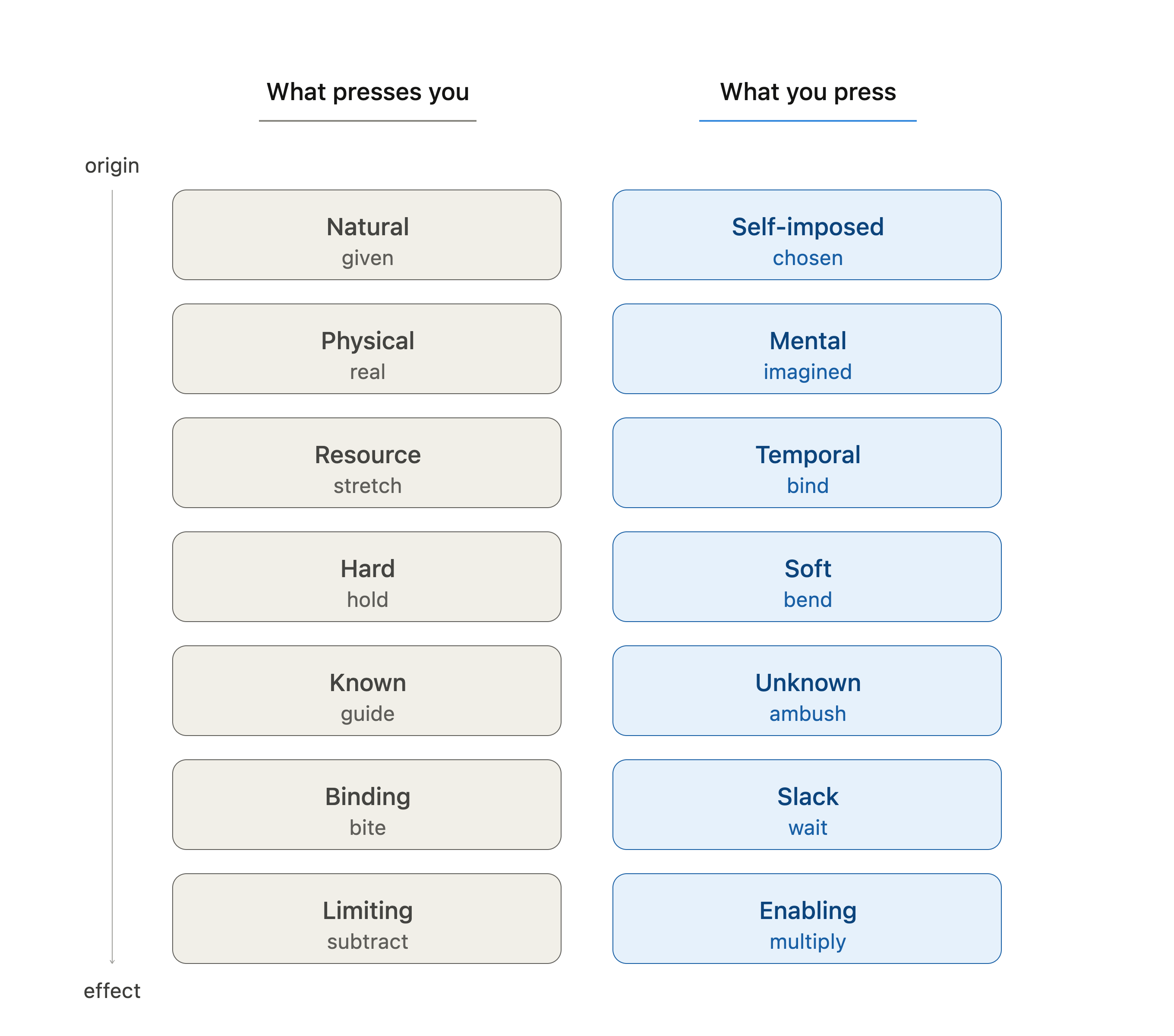
Source. Where it comes from. Natural constraints are given. Self-imposed constraints are chosen. Accept the given. Author the chosen. Most people rage at the first and neglect the second.
Substance. What is it made of. Physical constraints are real. Mental constraints are imagined. The real walls you plan around. The imagined ones are painted. Test each before you treat it as solid.
Supply. Resource constraints stretch. Temporal constraints bind. Money can be grown, raised, and traded. Time cannot. Spend the renewable to protect the fixed.
Rigidity. How firm it is. Hard constraints hold. Soft constraints bend. Break a hard one, and you break yourself. Defer to a soft one too long, and you stall. Know what you face before you push.
Visibility. Whether you can see it. Known constraints guide. Unknown constraints ambush. Plan around the ones you see. Hold a buffer for the ones you cannot. Every blowup is an unknown that was binding all along.
Force. Whether it is acting now. Binding constraints bite. Slack constraints wait.
At any moment, only one limit truly binds. Find the one that bites. Fix that, and the rest stops mattering.
Effect. What it does to you. Limiting constraints subtract. Enabling constraints multiply. The same fence can cage or focus. A sonnet has fourteen lines, and that is why it sings. The art is turning the limit into the form.
Mix of constraints. What works best?
The first dimension to expand further is that the optimal mix of constraints should vary across people (different personalities), the type of work (repetitive vs. creative/strategic), and businesses (startups vs. mature, and industry verticals). This optimal mix should also evolve dynamically over time. There is no one-size-fits-all. The mix has to be matched to the case.
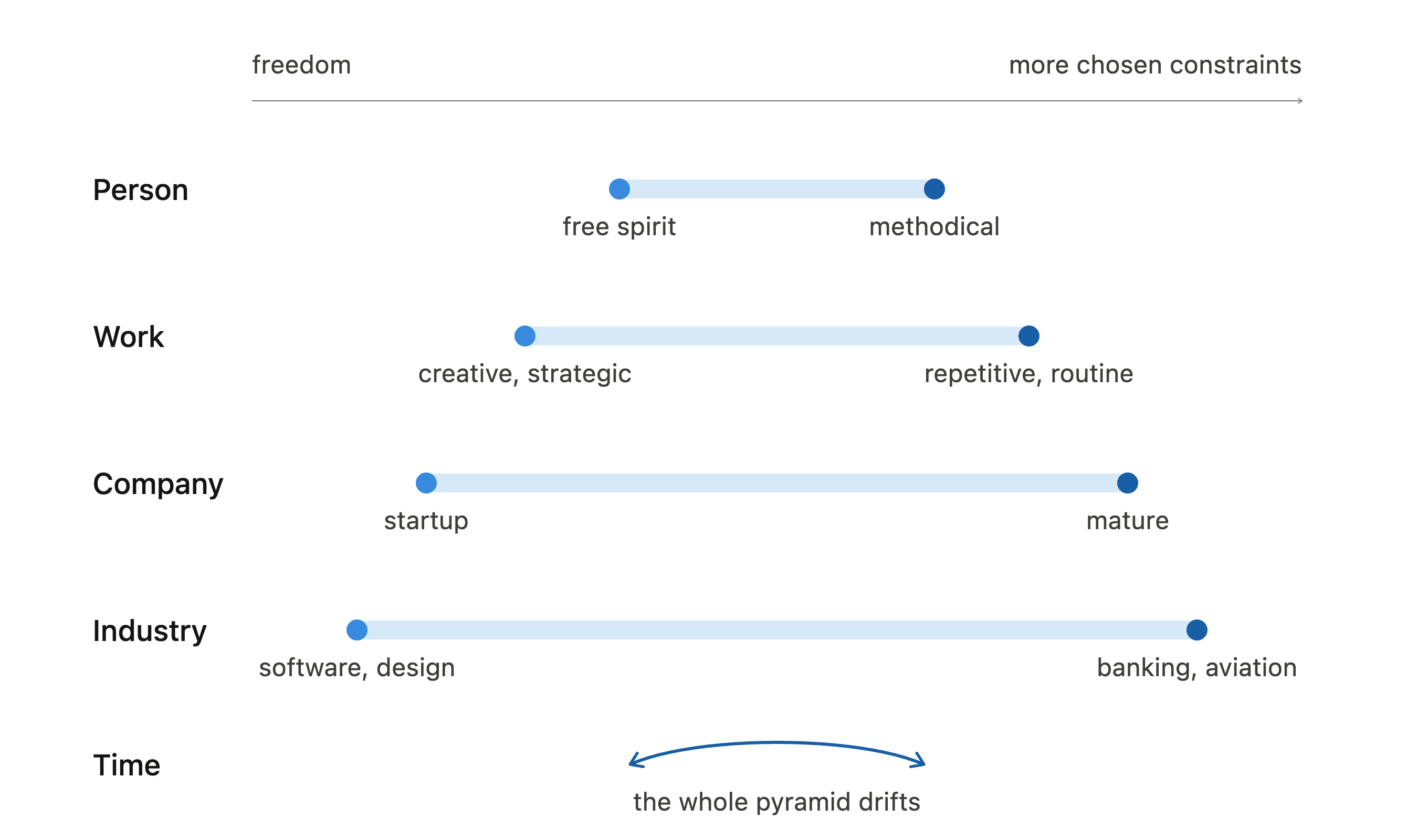
People differ in personality and traits, shaped by genetics, environment, and experience. A Type A, driven and competitive individual, performs best with more pressure and can take a heavier load before output suffers. A Type B, calmer and more patient individual, peaks at a lower level, where the same pressure that sharpens a Type A would instead wear them down. Neither type is better. Each simply has its own optimal level. Past it, anyone's work degrades, whatever the task. The best managers read this in each person and set the level of constraint that brings out their best.
The type of work, too, affects the right mix of constraints. Execution-focused work, which rewards focus, repetition, and efficiency, needs more constraints. Sales is the clear case. Strip out the targets, the metrics, the incentives, and most salespeople drift. On the other hand, thinking-focused work, which rewards strategy and creativity, needs fewer, but not none. Give a writer no deadline, no word limit, and no topic, and the work loops and rambles and never ships. The skill is matching the number of constraints to the nature of the work.
The right constraints also differ across businesses at different life stages and across different industry verticals. Startups are typically heavy on given constraints and light on chosen ones. Resources and time bite hard, and the process is thin by design, because speed and learning matter more than control. Mature companies are the reverse, lighter on given constraints, heavier on chosen ones. Resources abound, and capital and headcount are no longer the binding limit. They have to add more chosen constraints, such as process, controls, structure, and standards. Not because they love bureaucracy, but because at scale, customers expect the same consistent product every time, and without structure, the company cannot deliver it. It is not just about the mix of constraints, but also the kind and source. Startups are bound by what is given. They should resist adding too much of what is chosen. Mature firms are freed from what was given. They survive by adding what is chosen.
The optimal constraint mix also differs across industry verticals. The more a mistake costs and the less reversible it is, the more chosen constraints the business demands. Where errors kill or cannot be undone, the number of chosen constraints should run higher. Examples would be aviation, surgery, banking, and drug manufacturing. Chosen constraints like checklists, audits, regulations, and redundancy are what keep the business alive and licensed. Where errors are cheap and reversible, chosen constraints should run lower. Think design, software, advertising, research, and the arts. Experiment, iterate, fail fast. Too many constraints will ultimately kill the work the business is paid to produce.
The mix shifts across four levels, each weaker than the one beneath it. Industry sets the floor. Stage tilts it. The work and the person fine-tune from there. Read it top down to see where you sit. Build it bottom up to set your mix. Then keep tuning, because the ground keeps moving.

Parallels of constraints to business, investing, and life.
The framework of intentionally having constraints is not abstract to me. It is how I run Vision Capital Fund and my day-to-day. Too many constraints suffocate. None at all bloat. Somewhere between sits the sweet spot. And at almost every fork I have chosen constraints over freedom, on purpose.
Start with capital. I could go out and raise aggressively. Instead, I cap the fund’s growth. Size is the enemy of returns, so I would rather grow slower and stronger than faster and weaker, and I would rather hold the line than chase every dollar offered. I want sticky, long-duration capital, not flighty money that flees at the first drawdown, because the wrong investor is a constraint I cannot control and the right one is an additional freedom we have. I lean on external capital alongside my own, not because I lack conviction, but because the outside money I have promised to steward forces a discipline that my own money alone would not. And I want more inflows when the market falls, less when it prints new highs, because capital that shows up in the panic is worth more than capital that chases the euphoria.
Then the universe of stocks. I could own anything. I choose to own a select few. The fund lives in a narrow band, quality compounders that are growing, dominant, and durable, and the narrowness is the point. Durable secular growth over hypergrowth that cannot last. The top dogs riding a real tailwind over whatever has momentum this year. A handful of names held for years over hundreds of names traded for months. My constraint is my edge. By refusing most of the market, I am forced to know the little I own better than the people selling it to me.
Then temperament, which is where most returns are won or lost. The market hands you unlimited freedom to act, and acting is usually the mistake. So I constrain myself. Patience over greed, and over the fear of missing out, which is greed wearing a disguise. I would rather limit the downside and compound value conservatively than chase the highest possible upside. I have made peace with price swings rather than trying to manage them, because price volatility is the toll the patient pay and the panic tax the impatient give away.
Then accountability, the constraints I build because no boss imposes them on me now. Freedom from a manager is freedom to drift, so I manufacture deadlines. One memo and one article a month. The memo capped at three pages, because the page limit is what forces the thinking to clarify. A monthly update to investors and a letter each quarter. Earnings tracked every quarter for what I own and what I watch, reading every single word of the conference call transcripts. None of this is required of me. That is exactly why I require it of myself. I write to investors with honesty and plainness, because the promise to explain myself in public is the cheapest discipline I know and the hardest to fake.
And then the day itself, where all of it finally rests. The grand argument about scarcity and freedom comes down, in the end, to the body and the hours. These are the constraints I hold myself to. Sleep enough. Eat well. Move every day. Read, think, reflect, and write daily, because who you are is how you spend your time, and what you do, you slowly become. The fund is just this lifelong practice, scaled up. Find the few things worth doing. Fence out the rest. Then keep showing up inside the fence.

The information contained in this article is for general informational purposes only. While every effort has been made to ensure the accuracy and reliability of the content, errors or omissions may occur. The author and publisher do not assume any responsibility or liability for any errors, inaccuracies, or omissions in the content, nor for any actions taken based on the information provided. Readers are encouraged to verify any information before relying on it and to seek professional advice as needed.
24 Jun 2026 | Eugene Ng | Vision Capital Fund | eugene.ng@visioncapitalfund.co
Find out more about Vision Capital Fund.
You can read our annual and quarterly letters for Vision Capital Fund.
Check out our book on Investing, Vision Investing: How We Beat Wall Street & You Can, Too. We believe that individual investors can outperform the market over the long term. The book chronicles our entire investment approach. It explains why we invest the way we do, how we invest, what we look out for in companies, where we find them, and when we invest in them. It is available via Amazon in two formats: paperback and eBook.
Join our email list for more investing insights. Our emails tend to be ad hoc and infrequent, as we aim to write timeless, not timely, content.
Thank you! Your piece draws out lessons in investing and also in life. Cheers, Trung
Good article.
I think there's a natural extension of your thinking where the culture of a company should also reflect the constraints it has to deal with. It necessarily follows that cultures that aren't aligned with the constraints they face are not set up for success (like super laidback, high-freedom environment in banking).